🌾Every Grain Tells a Story
For over 7,000 years, millets have quietly sustained human civilizations—nourishing generations with their resilience, simplicity, and natural goodness. Once a staple across ancient cultures, these grains formed the foundation of diets long before modern, processed foods took their place.
In 2026, millets are witnessing a remarkable global revival.
This renewed interest is driven by a deeper awareness of lifestyle diseases, a growing shift towards gluten-free nutrition, and the urgent need for crops that can thrive in changing climatic conditions. What was once traditional is now becoming essential again.
A defining moment in this journey came when the United Nations declared 2023 as the International Year of Millets 2023 — placing these ancient grains at the center of global conversations around food security, health, and sustainability.
At the forefront of this movement is India, contributing nearly 41% of the world’s millet production, as reported by the Indian Institute of Millets Research. Deeply rooted in India’s agricultural and culinary heritage, millets have been known by many names and embraced in countless regional traditions.
Today, their role has evolved far beyond being simple staples.
Millets are now recognized as nutrient-dense functional foods, supported by modern research for their role in managing blood sugar levels, promoting heart health, strengthening bones, and supporting weight management. They represent a rare balance — ancient wisdom validated by contemporary science.
This guide invites you to rediscover millets in their complete richness.
Inside, you will explore:
The 10 major types of millets found in India
Their detailed nutritional profiles
Glycemic index insights for smarter dietary choices
Regional names across Indian languages
Research-backed health benefits
Practical guidance on selecting, preparing, and incorporating millets into your daily lifestyle
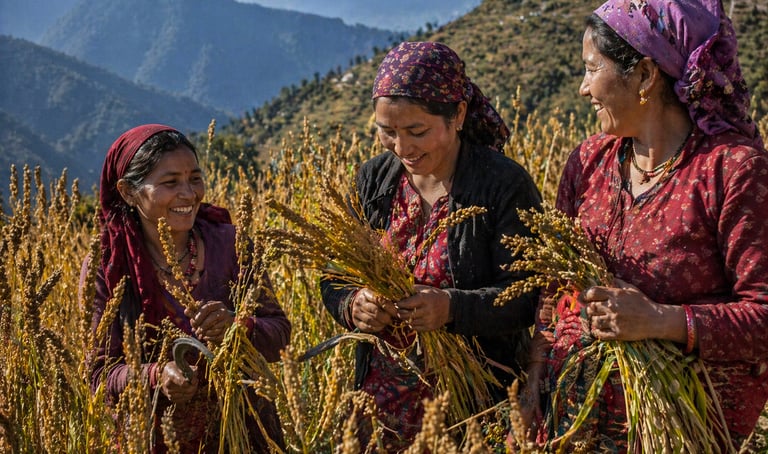
🌿 Authenticity in Every Grain. Purity in Every Bite
🌿 Millets are not just grains — they are a timeless legacy, returning to shape a healthier and more conscious future.
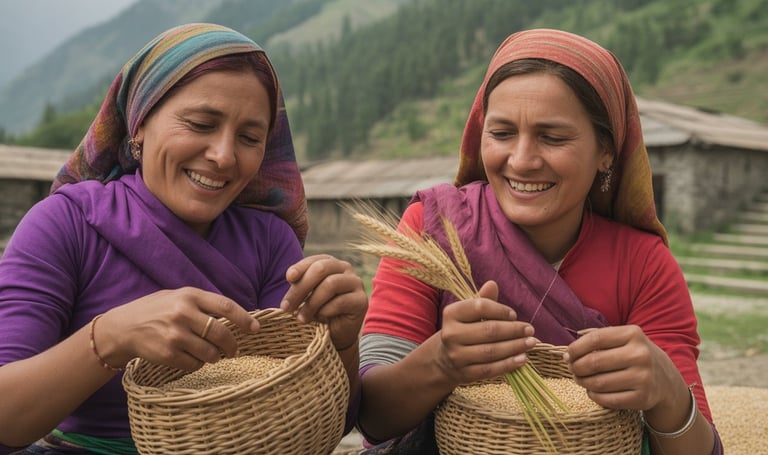
🌾हर दाने की एक कहानी
🌾 What Are Millets?
Millets are a diverse group of small-seeded cereal grains that have nourished human civilizations for thousands of years. Known for their resilience, nutritional richness, and adaptability, they are among the oldest cultivated crops in the world.
Traditionally, millets are classified into three broad categories:
🌿 Major Millets
These are the most widely cultivated and consumed varieties:
Sorghum (Jowar)
Pearl Millet (Bajra)
Finger Millet (Ragi)
🌾 Minor Millets
Smaller in scale but equally powerful in nutrition:
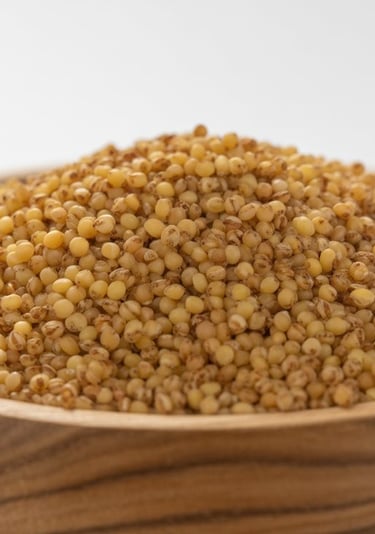
Foxtail Millet
Barnyard Millet
Little Millet
Kodo Millet
Proso Millet
Browntop Millet
🌱 Pseudo-Millets
Not true grasses, but nutritionally similar and often grouped with millets:
Amaranth
Buckwheat
🌍 A Grain Built for the Future
Botanically, millets belong to the grass family (Poaceae) and are cultivated as cereal crops for both human consumption and animal feed. What makes them truly exceptional is their ability to thrive in challenging environments.
Millets grow efficiently in semi-arid regions, requiring significantly less water — up to 70% less than crops like wheat and rice. This makes them one of the most environmentally sustainable grains, especially in the face of climate change and water scarcity.
💪 Nutritional Strength & Health Benefits
Across all varieties, millets share a powerful nutritional profile:
Naturally Gluten-Free
Suitable for individuals with gluten intolerance or Celiac diseaseLow Glycemic Index
Helps in maintaining stable blood sugar levels compared to refined grainsRich in Essential Nutrients
High in dietary fiber, plant-based protein, and key minerals such as calcium, iron, and magnesiumGut-Friendly & Easy to Digest
Supports better digestion and long-term metabolic healthLow Allergen Risk
Free from common wheat-related allergensMinimally Processed & Naturally Grown
Often cultivated using traditional farming practices with low chemical input
Certain varieties, particularly minor millets like Foxtail and Barnyard, are especially valued for their role in supporting balanced blood sugar and sustained energy release.
🌐 A Global Staple
According to the Food and Agriculture Organization, millets are grown in over 130 countries and serve as a daily food source for nearly 600 million people, especially across Asia and Africa.
Despite their ancient roots, millets are now gaining renewed global attention as a modern superfood — offering a rare combination of nutrition, sustainability, and versatility.
🌿 In essence, millets are more than just grains — they are a bridge between traditional wisdom and the future of healthy, sustainable living.
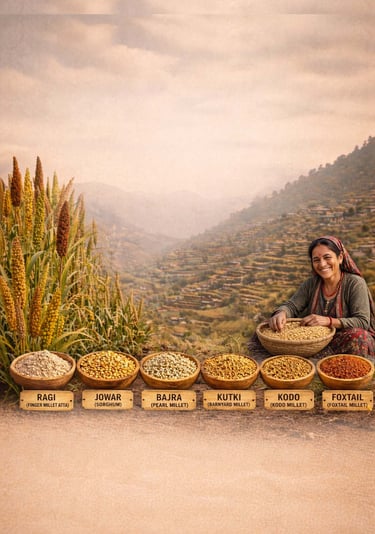
🌾 What Are Millets?
Millets are a diverse group of small-seeded cereal grains that have nourished human civilizations for thousands of years. Known for their resilience, nutritional richness, and adaptability, they are among the oldest cultivated crops in the world.
Traditionally, millets are classified into three broad categories:
🌿 Major Millets
These are the most widely cultivated and consumed varieties:
Sorghum (Jowar)
Pearl Millet (Bajra)
Finger Millet (Ragi)
🌾 Minor Millets
Smaller in scale but equally powerful in nutrition:
Foxtail Millet
Barnyard Millet
Little Millet
Kodo Millet
Proso Millet
Browntop Millet
🌱 Pseudo-Millets
Not true grasses, but nutritionally similar and often grouped with millets:
Amaranth
Buckwheat
🌍 A Grain Built for the Future
Botanically, millets belong to the grass family (Poaceae) and are cultivated as cereal crops for both human consumption and animal feed. What makes them truly exceptional is their ability to thrive in challenging environments.
Millets grow efficiently in semi-arid regions, requiring significantly less water — up to 70% less than crops like wheat and rice. This makes them one of the most environmentally sustainable grains, especially in the face of climate change and water scarcity.
💪 Nutritional Strength & Health Benefits
Across all varieties, millets share a powerful nutritional profile:
Naturally Gluten-Free
Suitable for individuals with gluten intolerance or Celiac diseaseLow Glycemic Index
Helps in maintaining stable blood sugar levels compared to refined grainsRich in Essential Nutrients
High in dietary fiber, plant-based protein, and key minerals such as calcium, iron, and magnesiumGut-Friendly & Easy to Digest
Supports better digestion and long-term metabolic healthLow Allergen Risk
Free from common wheat-related allergensMinimally Processed & Naturally Grown
Often cultivated using traditional farming practices with low chemical input
Certain varieties, particularly minor millets like Foxtail and Barnyard, are especially valued for their role in supporting balanced blood sugar and sustained energy release.
🌐 A Global Staple
According to the Food and Agriculture Organization, millets are grown in over 130 countries and serve as a daily food source for nearly 600 million people, especially across Asia and Africa.
Despite their ancient roots, millets are now gaining renewed global attention as a modern superfood — offering a rare combination of nutrition, sustainability, and versatility.
🌿 In essence, millets are more than just grains — they are a bridge between traditional wisdom and the future of healthy, sustainable living.
Learn With Us (Content / Education Section)
Healthy Living Starts with Knowledge
We don’t just sell millets — we help you understand them.
Learn which millet suits your body
Discover when and how to consume millets
Watch easy-to-follow recipe videos
Explore traditional and modern millet dishes


Our Gallery
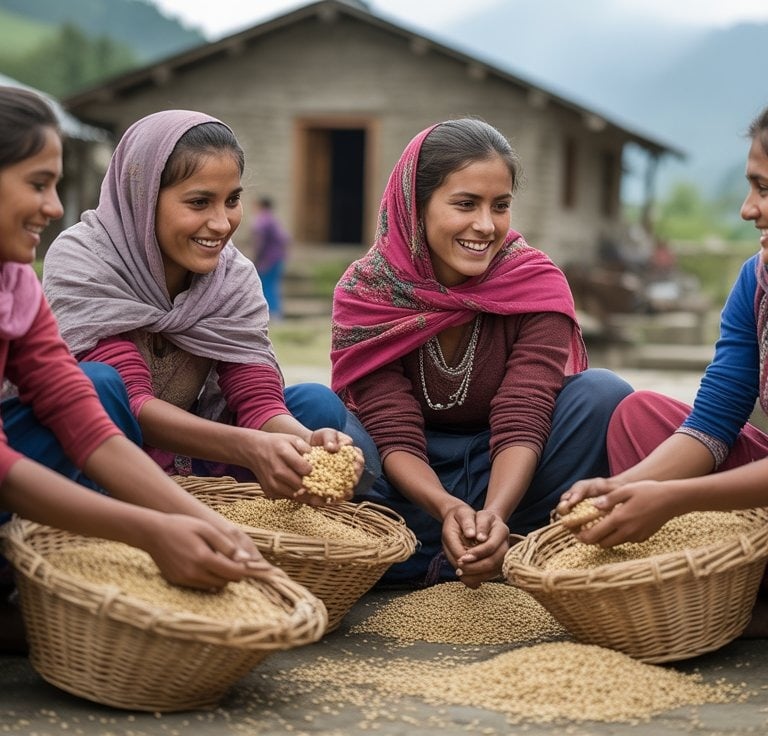
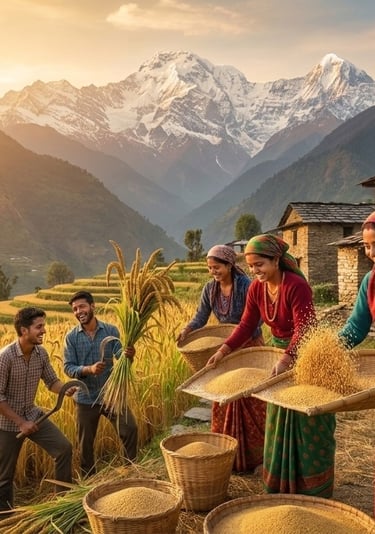
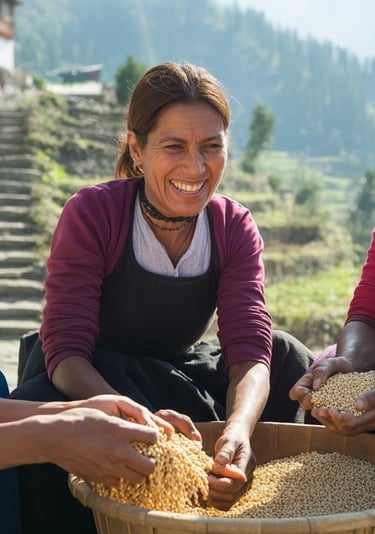
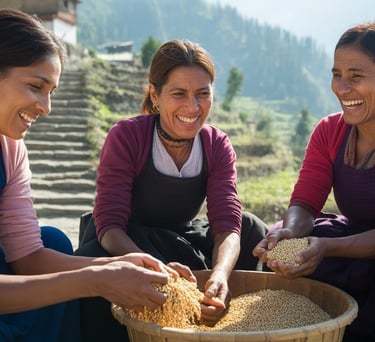
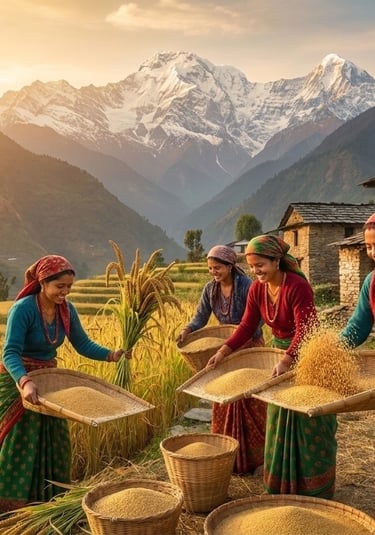
Snapshots from Uttarakhand's millet fields and farmers.


🌾Every Grain Tells a Story
For over 7,000 years, millets have quietly sustained human civilizations—nourishing generations with their resilience, simplicity, and natural goodness. Once a staple across ancient cultures, these grains formed the foundation of diets long before modern, processed foods took their place.
In 2026, millets are witnessing a remarkable global revival.
This renewed interest is driven by a deeper awareness of lifestyle diseases, a growing shift towards gluten-free nutrition, and the urgent need for crops that can thrive in changing climatic conditions. What was once traditional is now becoming essential again.
A defining moment in this journey came when the United Nations declared 2023 as the International Year of Millets 2023 — placing these ancient grains at the center of global conversations around food security, health, and sustainability.
At the forefront of this movement is India, contributing nearly 41% of the world’s millet production, as reported by the Indian Institute of Millets Research. Deeply rooted in India’s agricultural and culinary heritage, millets have been known by many names and embraced in countless regional traditions.
Today, their role has evolved far beyond being simple staples.
Millets are now recognized as nutrient-dense functional foods, supported by modern research for their role in managing blood sugar levels, promoting heart health, strengthening bones, and supporting weight management. They represent a rare balance — ancient wisdom validated by contemporary science.
This guide invites you to rediscover millets in their complete richness.
Inside, you will explore:
The 10 major types of millets found in India
Their detailed nutritional profiles
Glycemic index insights for smarter dietary choices
Regional names across Indian languages
Research-backed health benefits
Practical guidance on selecting, preparing, and incorporating millets into your daily lifestyle
🌿 Authenticity in Every Grain. Purity in Every Bite
🌿 Millets are not just grains — they are a timeless legacy, returning to shape a healthier and more conscious future.
🌾हर दाने की एक कहानी
🌾 What Are Millets?
Millets are a diverse group of small-seeded cereal grains that have nourished human civilizations for thousands of years. Known for their resilience, nutritional richness, and adaptability, they are among the oldest cultivated crops in the world.
Traditionally, millets are classified into three broad categories:
🌿 Major Millets
These are the most widely cultivated and consumed varieties:
Sorghum (Jowar)
Pearl Millet (Bajra)
Finger Millet (Ragi)
🌾 Minor Millets
Smaller in scale but equally powerful in nutrition:
Foxtail Millet
Barnyard Millet
Little Millet
Kodo Millet
Proso Millet
Browntop Millet
🌱 Pseudo-Millets
Not true grasses, but nutritionally similar and often grouped with millets:
Amaranth
Buckwheat
A Grain Built for the Future
Botanically, millets belong to the grass family (Poaceae) and are cultivated as cereal crops for both human consumption and animal feed. What makes them truly exceptional is their ability to thrive in challenging environments.
Millets grow efficiently in semi-arid regions, requiring significantly less water — up to 70% less than crops like wheat and rice. This makes them one of the most environmentally sustainable grains, especially in the face of climate change and water scarcity.
💪 Nutritional Strength & Health Benefits
Across all varieties, millets share a powerful nutritional profile:
Naturally Gluten-Free
Suitable for individuals with gluten intolerance or Celiac diseaseLow Glycemic Index
Helps in maintaining stable blood sugar levels compared to refined grainsRich in Essential Nutrients
High in dietary fiber, plant-based protein, and key minerals such as calcium, iron, and magnesiumGut-Friendly & Easy to Digest
Supports better digestion and long-term metabolic healthLow Allergen Risk
Free from common wheat-related allergensMinimally Processed & Naturally Grown
Often cultivated using traditional farming practices with low chemical input
Certain varieties, particularly minor millets like Foxtail and Barnyard, are especially valued for their role in supporting balanced blood sugar and sustained energy release.
🌐 A Global Staple
According to the Food and Agriculture Organization, millets are grown in over 130 countries and serve as a daily food source for nearly 600 million people, especially across Asia and Africa.
Despite their ancient roots, millets are now gaining renewed global attention as a modern superfood — offering a rare combination of nutrition, sustainability, and versatility.
🌿 In essence, millets are more than just grains — they are a bridge between traditional wisdom and the future of healthy, sustainable living.
Learn With Us
(Content / Education Section)
Healthy Living Starts with Knowledge
We don’t just sell millets — we help you understand them.
Learn which millet suits your body
Discover when and how to consume millets
Watch easy-to-follow recipe videos
Explore traditional and modern millet dishes

Our Gallery
Snapshots from Uttarakhand's millet fields and farmers.
Get in Touch
Reach out to connect with our Uttarakhand farmers.

